


When is a “Dentist” not a Dentist?
Have you heard these shocking but true stories of people being hurt by unlicensed individuals doing fake dental work? These so-called “smile experts” promise quick, cheap makeovers, but instead leave their victims with infections, pain, and expensive damage to repair.
Social media makes it easy for these fake dental work scammers to advertise veneers, whitening, and “Hollywood smiles” for a fraction of the normal cost. Unfortunately, what looks like a bargain can end in disaster.
Real Stories, Real Damage
It’s All In the Family
A brother-and-sister team recently made headlines for opening up a fake dental office in Orlando, Florida. The brother, who had a license to practice cosmetology, not dentistry, was performing the procedures while the sister assisted him and scheduled appointments. They allegedly shaved down a woman’s teeth and glued on veneers, leaving her with serious gum infections and permanent disfigurement. After multiple complaints, they were arrested and charged with practicing dentistry without a license and operating a non-licensed dental lab, court records show.
Fake Dental Work – Super Glue Version
Another woman got into legal trouble for marketing herself as a “veneer technician” and reportedly used super glue — yes, actual super glue — to attach veneers to people’s teeth. Several people she duped with these veneers described severe pain, nerve damage, and infections that required emergency dental surgery to fix. She was arrested for practicing dentistry without a license and for a scheme to defraud her customers.
Need a Tooth Pulled, No Problem!
In New York, an unlicensed person was performing root canals, extractions, and other invasive procedures in home-based dental “clinics.” Many procedures were done with incorrect anesthesia, which caused people not to be properly sedated. One patient even suffered partial facial paralysis. This fake dentist was also arrested after multiple complaints surfaced.
Not Isolated Cases
These cases are happening all over, and they show how dangerous it can be to trust someone who isn’t a licensed professional.
Why Unlicensed Dentistry is so Dangerous
- These people lack formal training or oversight. Dental licensing isn’t just paperwork. It’s protection. All licensed dentists have gone through years of education, training, and testing before earning the right to see patients. It also means they’re accountable if something goes wrong. Unlicensed “fake dentist” skips all that — and it shows in their work.
- There are rules and regulations to protect you from infection and cross-contamination risks. Most of these people are doing their fake dental work without proper sterilization equipment. This can spread germs and cause severe infections.
- Fake dental work can cause permanent injury and nerve damage. These people have not been trained. They can destroy teeth, harm nerves, and even affect your facial structure with incorrect drilling, gluing, or even extractions. These mistakes often can’t be undone.
- Where is the accountability? When you see a licensed dentist, there’s a professional board that ensures patient safety and ethics. With fake dental providers, there’s no recourse for you — they often disappear when something goes wrong.
How to Check Your Dentist's Credentials
Your dentist’s license should be prominently displayed in a visible location for anyone to see in their dental office. The notice should include the statement that they are licensed and regulated by their state. In Texas, you can see this information here at the Texas State Board of Dental Examiners. This requirement applies to all locations where dental work is practiced, including dental clinics, hospitals, and nursing homes.
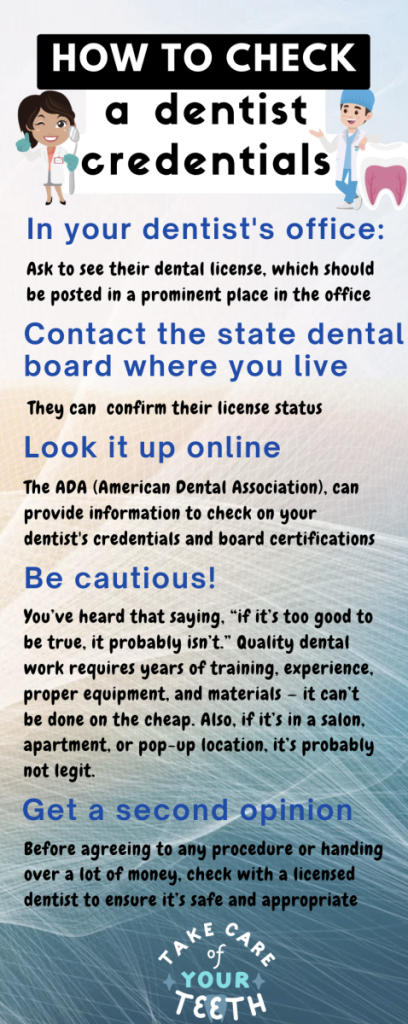
To check on a dentist’s credentials, follow these steps:
- In your dentist’s office: Ask to see their dental license and any additional certifications they have.
- Contact the state dental board where your dentist practices to confirm their license status and any disciplinary actions.
- Look up online professional directories, like the ADA (American Dental Association), which can provide information to check on your dentist’s credentials and board certifications.
How to protect yourself from fake dental work
- Be cautious! You’ve heard that saying, “if it’s too good to be true, it probably isn’t.” Quality dental work requires years of training, experience, proper equipment, and materials — it can’t be done on the cheap.
- What type of office setting is your dentist practicing in? A licensed dental office will not offer dental work in a salon, apartment, or pop-up location. That’s a big red flag!
- If you’re not sure, get a second opinion. Before agreeing to any procedure or handing over a lot of money, check with a licensed dentist to ensure it’s safe and appropriate.
The bottom line
That “too good to be true” offer might cost far more than your money — it could cost you your health. Also, be careful if you’re getting teeth jewelry, grills, and whitening done by non-professionals as well. At Mid Cities Dental, your safety and oral health are always our top priority.