

Summer is over, and your kids are back in school. How many of your kids are not getting enough sleep (or you for that matter) and using energy drinks or other caffeinated drinks to stay awake? A couple of different studies say that 30-50% of teens ages 12-17 are drinking caffeine-filled energy drinks regularly.
What are energy drinks?
Energy drinks were originally designed for athletes to help them stay energized during intense workouts and sporting events. Now they have become mainstream for the average person to use to give an extra energy burst or to help them stay awake at work or school. Many energy drinks are high in caffeine, sugars, sucralose, sugar alcohols, and other legal stimulants.
How much caffeine is in a cup of coffee?
The average cup of coffee can have anywhere from 70 to 170 milligrams of caffeine.
Why does that number have such a big variation? It depends on the brewing method, type of coffee bean, size of the grind, and the size of the cup. For example, a large brewed coffee from Starbucks can have over 300 mg of caffeine in it.
How much caffeine is in other drinks?
Here are some average amounts of caffeine in everyday drinks:
Teas:
- Black tea – 8 oz = 40-70 mg
- Green tea – 8 oz = 20-45 mg
- Matcha tea – 8 oz = 60-80 mg
Soda:
- Coke Original – 12 oz = 34 mg
- Sunkist Orange – 12 oz = 19 mg
- Mountain Dew – 12 oz = 55 mg
- Dr. Pepper – 12 oz = 42 mg
Regular Pepsi – 12 oz = 38 mg
Pepsi Zero – 12 oz = 69 mg
Energy Drinks:
- Redbull – 8.4 oz = 80 mg
- Redbull – 12 oz = 151 mg
- Monster – 16 oz = 160 mg
- Rockstar 16 oz = 160 mg
- Celsius Sparkling – 12 oz = 200 mg
- ZOA Zero Sugar 12 oz = 160 mg
- Alani Nui 12 oz = 200 mg
- Body Amour 16 oz = 95 mg
- Ghost – 16 oz = 200 mg
- Guayaki Yerba Mate – 16 oz = 150 mg
- Starbucks Iced Energy – 12 oz = 160 mg
- Bang 16 oz = 300 mg
Are energy drinks safe for teens?
Most healthy adults can have 400 mg of caffeine (the equivalent of 2-3 12-oz cups of coffee) a day without major side effects.
It is not recommended for teens to have more than 100 mg per day. The American Academy of Pediatrics (AAP) says that energy drinks are not appropriate for younger children due to the high levels of caffeine and sugar in them. They recommend discouraging teens from drinking any energy drinks at all, but we all know how impossible that can be. Tell a kid they shouldn’t do something, and they will make it their goal to do whatever you said not to do, right? But you can share with them this health information and your concerns about it.
What is Caffeine Toxicity?
Recently, ERs have seen a rise in children being admitted due to overconsumption of caffeine, also known as caffeine toxicity. Symptoms include vomiting, high blood pressure, racing heart, heart rhythm problems, and, less commonly, disorientation and hallucinations.
The FDA has put energy drinks in the “dietary supplement” category. Therefore, they don’t have to test them or approve them before they’re marketed. The manufacturer of the drink is responsible for safety and truth in labeling. Give us a call at our Hurst, Texas dental officce if you have any questions.
What ingredients are in Energy drinks besides caffeine?
Sugar: Many energy drinks have a high amount of sugar or other sweeteners. This can contribute to many health and oral problems.
Other substances: Many energy drinks will have herbal substances or supplements such as ginseng and guarana in addition to caffeine. These are used to increase energy and mental alertness. There is limited research on their effectiveness, and they may also interfere with medications. Just because something is listed as natural doesn’t mean it’s healthy for teens.
Negative effects of heavy caffeine use
Remember, for the average adult, more than 400 mg of caffeine per day is considered heavy use. For teens, heavy use is anything over 100 mg per day.
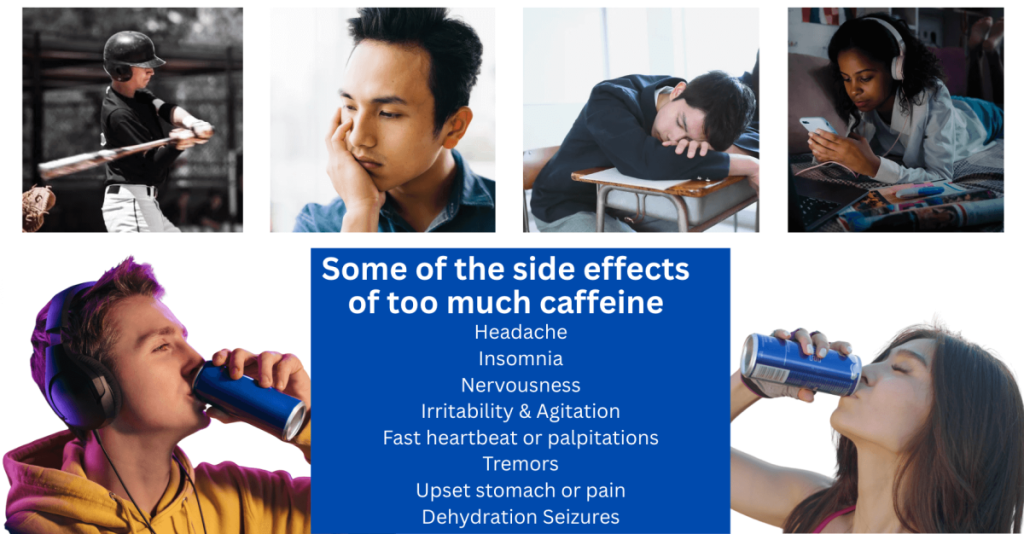
Side effects for anyone (regardless of age) can be:
- Headache
- Insomnia
- Nervousness & Agitation
- Irritability
- Fast heartbeat or palpitations
- Tremors
- Upset stomach or pain
- Dehydration
- Seizures (toxicity can happen with 1200 mg or more)
Specific risks of Energy Drink usage for teens
Heart effects
The stimulants in energy drinks can lead to increased blood pressure, heart palpitations, and rhythm disturbances, which are bad for developing hearts.
Dehydration
Caffeine is a natural diuretic, which could lead to dehydration.
Nervous system impact
Too much caffeine can lead to anxiety, headaches, sleep problems, stomach problems, irritability, nervousness, and more.
High sugar content
Too much sugar is bad for developing oral and physical health in teens.
Why is your dentist worried about your teen's energy drink usage?
We are concerned about your overall health, whether you are a teen or an adult. Many of these caffeinated drinks are filled with sugar, which can cause tooth decay, tooth sensitivity, gum disease, and many other oral health issues. As we mentioned in the article The Microbiome Link: 3 Sneaky Things Your Mouth Tells Your Gut, your oral microbiome can affect your gut microbiome; therefore, all the things you eat or drink can affect your overall health.
Please give our family-friendly office a call to set up an appointment for your teen if you’d like us to talk to them about the consequences of energy drinks on their oral and physical health. Sometimes kids listen better when learning about the side effects from a doctor.